
 EN
EN
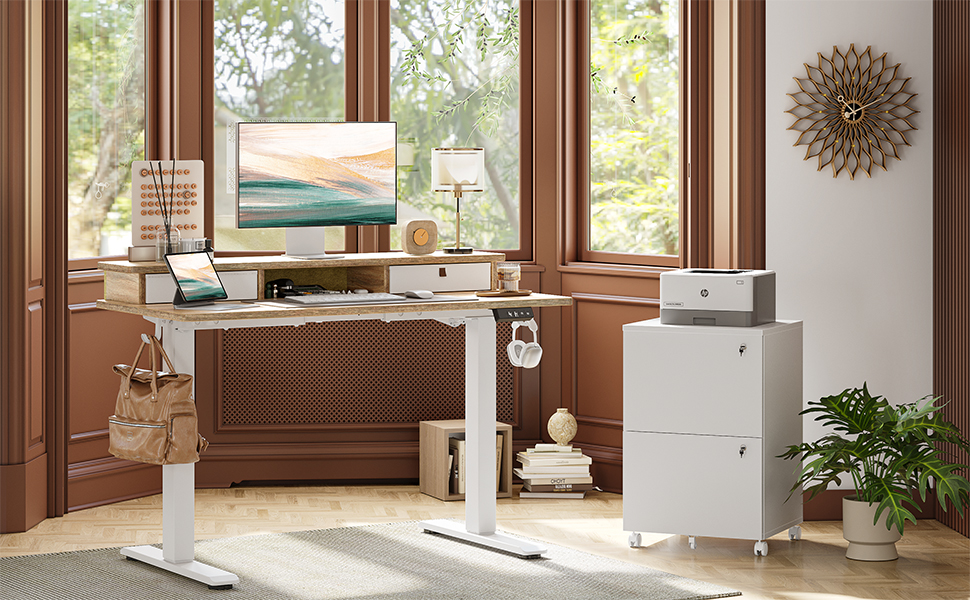
Health Benefits of Height Adjustable Tables
Reducing Sedentary Behavior in the Workplace
Sitting around all day can lead to serious health problems down the road, including things like heart issues and diabetes. Research from last year showed something interesting too. Workers who had those adjustable height desks actually cut back on their sitting time by about two and a half hours each day. That's pretty close to what the CDC recommends for regular movement breaks throughout work hours. The best part? These kinds of desks let people switch positions naturally during the workday. Someone might stand up while taking a phone call or do some quick stretches between projects without really affecting how much work gets done overall.
Improving Blood Circulation and Posture with a Height Adjustable Table
Alternating between sitting and standing boosts lower-body circulation by 15–20%, reducing fatigue and swelling in the legs and feet (Ergonomics Journal 2022). Proper desk height promotes a neutral spine and relaxed shoulders, minimizing slouching. Workers report 40% fewer posture-related discomforts within six weeks of consistent use.
Minimizing Back Strain Through Sit-Stand Desk Usage
Back pain affects 54% of office workers annually (Mayo Clinic 2022). Height adjustable tables help redistribute pressure from the lower back, reducing lumbar disc compression by up to 35% when standing. In a 3-month trial, 68% of participants discontinued over-the-counter painkillers for back issues.
Long-Term Health: Lowering Risks of a Sedentary Lifestyle
Regular sit-stand transitions reduce metabolic syndrome risk by 29% according to a 2023 ergonomic report. Over five years, users experience improved glucose regulation and an 18% lower incidence of cardiovascular disease, making these desks a strategic investment in long-term employee health.
Boosting Productivity with Height Adjustable Tables
Enhancing Focus and Output Through Adjustable Workstations
Switching between sitting and standing sharpens mental focus more effectively than static postures. A University of Leicester study found a 46% increase in productivity among employees using sit-stand desks compared to traditional setups. By reducing physical distractions like stiffness, adjustable workstations help maintain concentration and workflow continuity.
How Movement and Postural Shifts Improve Cognitive Performance
Micro-movements—such as shifting weight or brief standing—boost cerebral blood flow by 12–15% (Occupational Health Journal, 2023), enhancing problem-solving speed and alertness. Workers naturally vary posture every 30–60 minutes at height adjustable tables, counteracting mental fatigue from prolonged sitting. These dynamic shifts are especially beneficial for creative or detail-intensive tasks.
Case Study: 15% Productivity Increase at a Tech Company After Desk Upgrade
A software company that makes tools for small businesses recently rolled out height adjustable desks for their entire engineering department of around 200 people. Within just half a year, they noticed project completion rates went up about 15%. The management thinks this happened because workers weren't getting distracted as much from physical discomfort while working on those intense coding sessions. Staff members mentioned feeling better too, with roughly 28% fewer reports of that dreaded afternoon slump when everyone's struggling to stay awake. This matters a lot when projects have strict timelines and everyone needs to keep pushing through without burning out.
| Factor | Impact |
|---|---|
| Reduced discomfort breaks | 22% fewer interruptions/day |
| Standing during meetings | 18% faster decision-making |
| Posture variety | 31% higher task engagement |
Ergonomic Design and Customization for Individual Needs
Core Principles of Ergonomic Workspace Setup with Height Adjustable Table
Good ergonomic design really comes down to three main things: being able to adjust things, getting proper alignment, and offering support tailored to individual needs. Adjustable height tables hit all these marks because they let people switch between sitting and standing easily throughout the day. When using these tables properly, workers can keep their monitors positioned so the top third sits at eye level, which is super important for reducing neck strain. The elbow angle should be somewhere around 90 to 110 degrees when typing, something most adjustable tables help achieve naturally. Research published in 2023 found that offices using these kinds of setups saw about a 74% drop in workplace injuries related to muscles and joints compared to traditional fixed height desks.
| Principle | Implementation in Adjustable Tables | Benefit |
|---|---|---|
| Dynamic Height Control | Smooth electric adjustment (28"-48" range) | Accommodates sitting/standing needs |
| Postural Alignment | Monitor arms & keyboard trays at elbow height | Reduces neck/shoulder strain |
| User-Centric Design | Memory presets for multiple users | Supports shared workspace setups |
Personalized Adjustability for Diverse Users and Preferences
People come in all shapes and sizes, move differently, and have varied ways of getting work done, so one size definitely doesn't fit all when it comes to workspace design. Adjustable tables can actually reach most people from very short to quite tall individuals, making them suitable for almost anyone who needs to sit or stand while working. These tables let workers adjust their setup depending on whether they need concentration time alone or want to collaborate with colleagues around them. Some models even offer preset memory positions, divided surface areas for different tasks, and gentle alerts through apps reminding folks to change positions throughout the day. Studies suggest that when employees get to set up their own space just right, they tend to use these adjustable options about 63 percent more regularly than if given standard office furniture instead.
For organizations, this flexibility future-proofs office spaces—one desk can serve interns, executives, and visiting staff equally well. When purchasing in bulk, prioritize models with wide height ranges and compatibility with third-party accessories, as recommended in large-scale workplace studies.
Supporting Flexible and Hybrid Work Environments
Adapting Workspaces to Dynamic Work Models
With hybrid work now part of 67% of corporate strategies (Cisco 2024), adaptable environments are essential. Height adjustable tables enable quick reconfiguration for solo focus, collaborative sessions, or virtual meetings. According to the 2024 Workplace Trends Report, companies using adaptive furniture achieved 27% faster project turnaround due to smoother workspace transitions.
Shared Desks and Multi-User Flexibility with Adjustable Heights
Adjustable height tables really work wonders for hot-desking setups. People can just press a button and have their desk at exactly the right level within moments thanks to those handy memory settings. The difference makes a big impact too - studies suggest around half of all workspace disagreements disappear when companies switch to these flexible solutions instead of traditional fixed workstations which simply don't cut it anymore in today's mixed office environments. Take one software company as an example. They swapped out all their old static desks for adjustable ones and saw their office space being used about 20 percent better than before. Now employees with different body types and preferences can comfortably share the same area without needing special accommodations for everyone.
FAQ Section
What are the health benefits of using height adjustable tables?
Height adjustable tables reduce sedentary behavior, improve blood circulation, minimize back strain, and lower long-term health risks associated with a sedentary lifestyle.
How do height adjustable tables improve productivity?
They increase focus and output by allowing users to switch between sitting and standing, which sharpens mental focus and reduces physical distractions.
Are height adjustable tables suitable for flexible and hybrid work environments?
Yes, they are ideal for dynamic work models and shared desks as they provide quick reconfiguration and memory settings for multiple users.