
 EN
EN
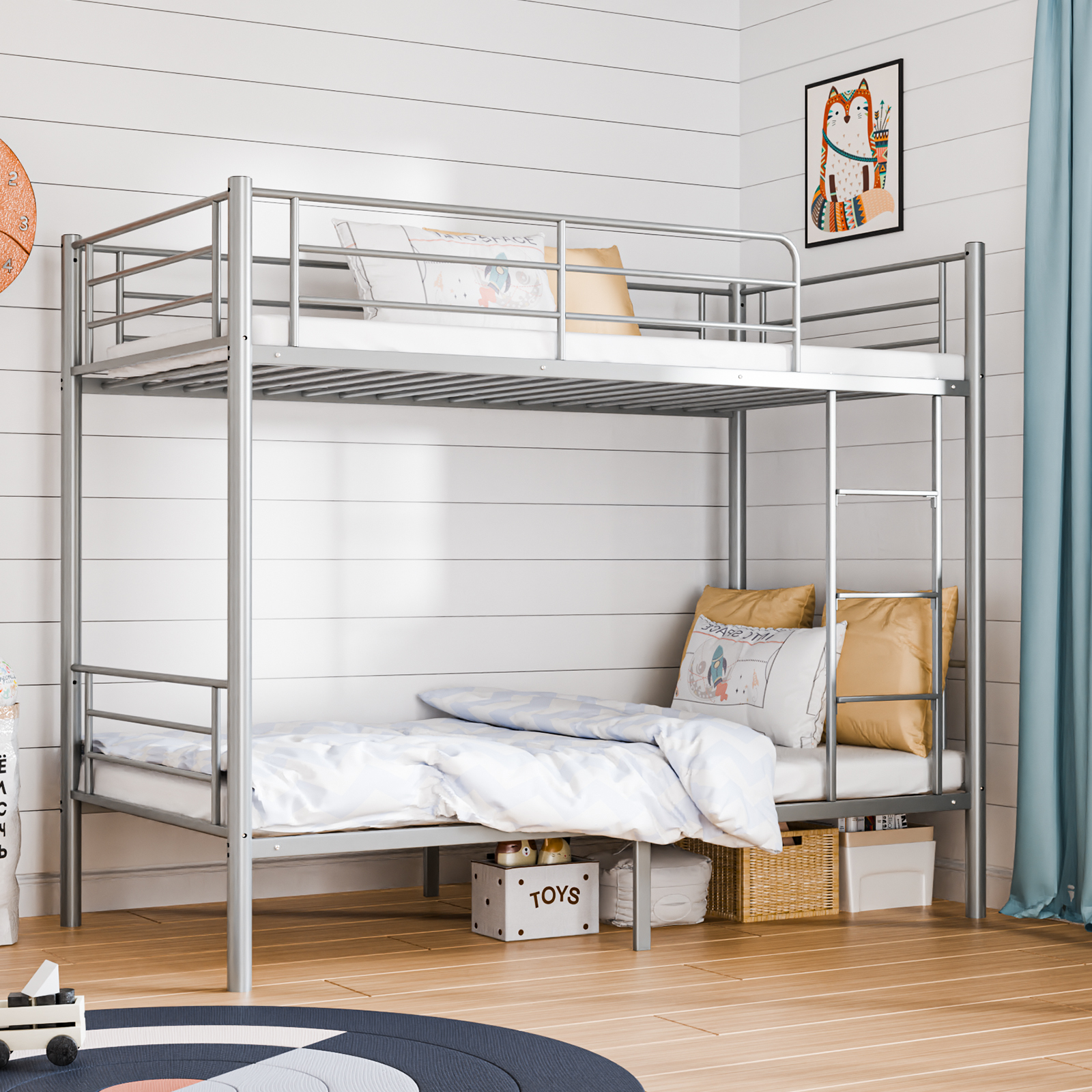
Durability and Long-Term Cost Efficiency of Metal Bunk Beds in Dormitories
Steel Frame Strength and Resistance to Wear in High-Use Dorm Environments
Steel framed bunk beds really stand up well in busy dorm settings because they just don't bend or sag when people jump around on them all day long. The powder coat finish helps protect against those annoying scratches and dents from suitcases being dragged across the bed frame, plus it keeps spills from soaking into the metal surface. This matters a lot since bodily fluids won't stick around either, and worst case scenario, there's nowhere for bed bugs to hide. Wood and laminate frames need special chemicals sprayed on them regularly to keep pests away, but steel naturally resists this problem without any extra treatment. According to actual tests done at universities and colleges, these steel frames can last for 15 years or more even with constant use. They beat out wooden frames by about 60 percent in those stress tests that simulate years of wear and tear. For campus housing managers, this means fewer repair calls and longer time between replacements, saving money in the long run despite the higher initial cost.
Comparison of Metal, Wood, and Aluminum: Material Performance in Institutional Use
Material choice directly shapes long-term performance in dorm settings:
| Material | Durability | Maintenance Needs | Weight Capacity | Moisture Resistance |
|---|---|---|---|---|
| Steel | Excellent | Low (wipe-down) | 500+ lbs | High |
| Wood | Moderate | High (sanding/refinishing) | 300 lbs | Low (warps) |
| Aluminum | Good | Medium | 350 lbs | Medium (dents) |
Steel has better load distribution properties and stronger welds that basically get rid of those annoying failure problems we see elsewhere. Wood structures need constant attention throughout the seasons just to keep joints tight and stop that dreaded squeaking sound everyone hates. Aluminum isn't much better either since it tends to crack under stress right at those connection points over time. Facility managers at schools have actually seen about three times less repair work needed when using steel compared to wood buildings after just three years. That kind of durability makes steel a real winner for campuses where maintenance budgets are already stretched thin.
Total Cost of Ownership: Why Metal Bunk Beds Save Money Over 5 Years
Steel bunk beds might cost more upfront, but they last around 15 years before needing replacement, which actually makes them about 40% cheaper overall than wooden ones that usually get swapped out every 5 to 7 years or so. Maintenance is another big difference. Steel just needs some regular cleaning, while wood constantly needs refinishing work and aluminum frames keep requiring new screws and bolts over time. Looking at campus housing reports from 2023, schools that switched to steel frames saw their bed bug treatment expenses drop by roughly $18k each year. And when we factor in all the labor costs for fixing things, replacing parts, and dealing with pests, steel ends up saving about $220 per bed over five years. That kind of math makes steel bunk beds pretty much the smartest financial choice for colleges and universities trying to manage their budgets.
Safety Standards and Regulatory Compliance for Dorm Bunk Beds
Meeting U.S. Safety Regulations (CPSC, ASTM F1427) and Preventing Entrapment Hazards
College dorm bunk beds need to meet certain safety standards set by the Consumer Product Safety Commission along with ASTM F1427, which is basically the gold standard for safe residential bunk beds. The rules say that upper bunks should have guardrails running all along both sides, and those gaps between rails can't be wider than 3.5 inches so nobody gets stuck with arms or heads. Mattress platforms also need to stay securely attached at the corners to avoid dangerous spaces forming underneath. There are strict warnings too - kids under six years old aren't allowed to sleep on top bunks according to these regulations. Ladders need proper attachment points and guardrails should cover the entire length of the bed frame to reduce chances of falls, especially important in crowded dorm settings where space is limited. Looking at CDC data from 2023 shows something interesting happened after these rules were fully implemented across campuses nationwide. Injury rates dropped by about 18% when compared to previous years, proving just how much difference following safety guidelines can make in actual living situations.
Guardrail, Gap, and Structural Requirements Across U.S. and International Dorm Codes
While U.S. standards mandate minimum 5-inch guardrails above mattresses, the EU’s EN 747 specifies 5.9 inches and tighter gap limits (<4.7 inches); China’s GB 24430 requires non-detachable guardrails and routine load testing for institutional use. Globally consistent priorities include:
- Minimum 9–14 inch clearance between bed frames and walls
- Uniform ladder rung spacing (<16 inches vertically)
- Steel welds or bolt connections validated to withstand 500 lb cyclic loads
These regional variations necessitate design customization—but all converge on eliminating entrapment hazards and ensuring structural resilience in 24/7 dorm operations.
Weight Capacity and Injury Risk: Safety Performance of Metal Bunk Beds
ASTM Minimum Weight Ratings vs. Real-World Occupancy in College and High School Dorms
The ASTM standards for bunk beds set a weight capacity between 250 to 500 pounds per level, but honestly, this number doesn't always hold up when people actually start using them. College dorm rooms get pretty busy sometimes with students jumping on beds, sitting between the levels, or just general chaos during late night parties. Steel framed bunks typically handle way more than what's required because of their stronger build quality. They can take those unexpected stresses much better than other materials. Schools have noticed something interesting too - metal frames bend or break about half as often as wooden ones when subjected to all sorts of rough treatment. That speaks volumes about why so many campuses are switching to steel for their student accommodations these days.
Injury Data Analysis: Fall and Failure Rates by Bunk Bed Material (CDC 2020–2023)
According to CDC data from 2020 through 2023, students who sleep on steel bunk beds experience about 28% fewer fall-related injuries compared to those on wooden frames. Steel structures also fail structurally at a rate 35% below their wooden counterparts. Why? Metal doesn't warp or split over time like wood does, especially when dorm rooms get turned over frequently between semesters. The screws and bolts stay tight where they should be. Another advantage comes from steel's non-porous surface. It doesn't absorb moisture or harbor bacteria growth the way wood can, which means floors around steel bunks stay drier and cleaner. Fewer wet spots translates to fewer slip accidents caused by moldy or rotting wood surfaces. For college campuses packed with students living in close quarters, these properties clearly position steel as the best choice for reducing injuries across dormitory settings.
Space-Saving Design and Vertical Efficiency in Student Housing
Maximizing Floor Space: How Metal Bunk Beds Optimize Room Capacity
In college dorms where students typically get only around 90 to 110 square feet of space, metal bunk beds make good sense. When we stack the sleeping areas, suddenly there's way more room left on the floor for things like desks, storage boxes, or even places where roommates can work together. Some studies from colleges themselves show this frees up about two thirds of the floor space. The frames are made of thin steel which takes up minimal space but still holds everything solidly in place. This means school administrators can actually fit more students into existing dorm buildings without having to tear down walls or do expensive renovations. Basically, what was once empty air above our heads becomes actual usable space. And let's face it, most campuses are struggling with not enough housing these days. About four out of five schools report serious space problems anyway.
Clearance Requirements for Ceilings and Bunk Spacing in Renovated or Low-Clearance Dorms
Getting things right really depends on managing clearances properly. The safety rules say there needs to be at least 30 inches from the top of upper bunks to the ceiling, along with guardrails that are no less than 5 inches high and ladder clearances of around 15 inches wide. When dealing with older buildings where ceilings are below 8 feet tall, adjustable steel frames come into play. These frames have those extendable legs that let them fit better without violating safety standards, bringing the required clearance down to just 24 inches. While these specific measurements might seem strict, they actually work well for most dorm situations, covering about 85 percent of cases where standard setups won't do. Plus, this approach still keeps the main advantage we're after: saving valuable floor space in tight quarters.
Low Maintenance and Bed Bug Resistance of Metal Bunk Beds
Surface Non-Porosity and Cleanability: Reducing Pest Infestations in Shared Dorms
The metal frame of bunk beds gives dorm managers a real edge when it comes to keeping pests at bay. These beds have smooth surfaces that don't trap dust or hide bed bugs in tiny cracks, which is something wooden or laminate beds just can't match. Cleaning becomes much simpler too - staff can wipe down frames with standard disinfectants instead of dealing with expensive fog machines or hiring professional cleaners for deep scrubs. Colleges spend anywhere from two thousand five hundred to five grand fixing bed bug problems each year in student rooms. So switching to metal beds isn't just about looks; it saves money long term while keeping students safe from these unwelcome guests.
Longevity in High-Turnover Housing: Maintenance Needs Compared by Material
Steel frames endure 5–10— more occupant turnover than wood with negligible upkeep. Unlike wood—requiring sanding, varnishing, or joint reinforcement—metal units demand minimal intervention:
| Maintenance Factor | Metal Bunk Beds | Wood Bunk Beds |
|---|---|---|
| Annual Upkeep Time | 15–30 minutes | 2–4 hours |
| Pest Vulnerability | Resists bed bugs | Attracts bed bugs |
| Replacement Cycle | 10–15 years | 5–8 years |
This durability cuts replacement costs by 60% over a decade. Institutional facilities report 40% lower annual maintenance budgets after transitioning to metal—validating its role as the lowest-lifecycle-cost solution for high-turnover student housing.
FAQ Section
What makes metal bunk beds more durable for dormitory use?
Metal bunk beds, particularly those with steel frames, are more durable because they resist bending, sagging, and warping even under constant use. Their powder coat finish also prevents scratches, dents, and moisture penetration, extending their lifespan.
How does the initial cost of metal bunk beds compare to their long-term savings?
While metal bunk beds may have a higher upfront cost compared to wood or aluminum, they are more cost-effective over time due to reduced maintenance needs and longer replacement cycles, resulting in approximately 40% savings over a span of five years.
Are metal bunk beds safe for college dorms?
Yes, metal bunk beds typically adhere to U.S. safety regulations such as CPSC and ASTM F1427 standards, which ensures features like guardrails and structural safety measures are in place to prevent fall and entrapment hazards.
How do metal bunk beds help in space optimization in dormitories?
Metal bunk beds are designed to maximize vertical space, freeing up floor space for other dorm essentials like desks and storage boxes, thus allowing more students to be accommodated without requiring structural modifications to dorm rooms.
Do metal bunk beds require less maintenance compared to wooden beds?
Yes, metal bunk beds require minimal maintenance—primarily regular cleaning—whereas wooden beds often require refinishing, sanding, and joint reinforcement. This reduces long-term maintenance costs significantly.
Table of Contents
- Durability and Long-Term Cost Efficiency of Metal Bunk Beds in Dormitories
- Safety Standards and Regulatory Compliance for Dorm Bunk Beds
- Weight Capacity and Injury Risk: Safety Performance of Metal Bunk Beds
- Space-Saving Design and Vertical Efficiency in Student Housing
- Low Maintenance and Bed Bug Resistance of Metal Bunk Beds
-
FAQ Section
- What makes metal bunk beds more durable for dormitory use?
- How does the initial cost of metal bunk beds compare to their long-term savings?
- Are metal bunk beds safe for college dorms?
- How do metal bunk beds help in space optimization in dormitories?
- Do metal bunk beds require less maintenance compared to wooden beds?